
CATEGORY GUIDE 10 min read
Pantry Storage in 2026: Pull-Out Baskets, Expandable Bins and Smarter Shelf Zones
Plan a 2026 pantry storage range with pull-out baskets, expandable bins and shelf zones. A practical sourcing guide for retailers and private-label buyers.
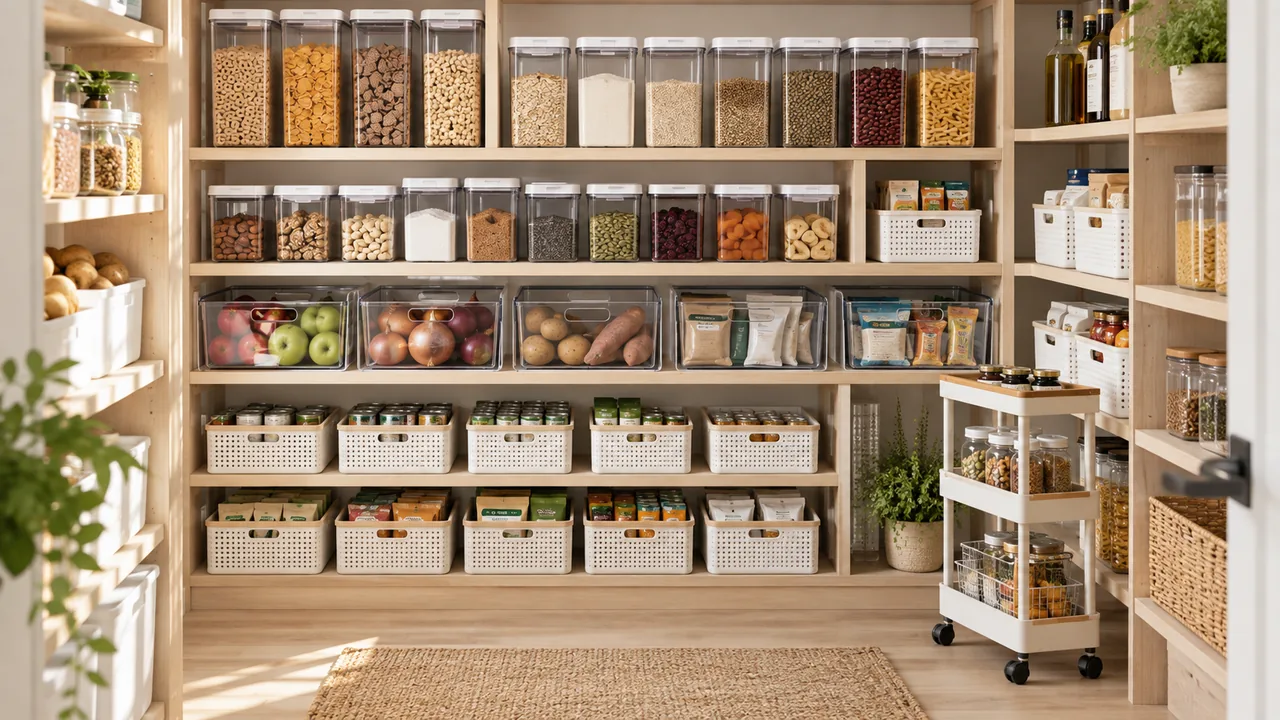
Why pantry storage needs a system, not a collection of containers
Pantries vary more than many product photos suggest. Shelf widths, depths, heights, door openings and adjacent appliances all affect whether an organizer feels useful after purchase. A range made only of similarly sized boxes can leave a shopper with an orderly-looking shelf but no easy way to access items stored at the back.
For a retailer or private-label team, the opportunity is to build a small system around common storage jobs. The system should make the difference between each format clear: one product helps retrieve items, another divides shelf space, and another groups smaller products. That distinction improves shelf communication, product-page photography and replenishment decisions.
The HAKORA Kitchen & Pantry Organizers range and Expandable Storage Bins range offer catalog examples for developing this type of assortment. Final size, material, color, packaging and program terms should always be agreed for the exact approved SKU.
1. Start with the shelf problem the product must solve
Write the product brief around the storage environment, rather than starting with a list of colors or a target retail price. Ask where the organizer will sit and what it needs to make accessible.
- Deep cabinet shelves: Products at the back need to be retrieved without repeatedly moving items at the front.
- Variable shelf widths: A retailer may want a coordinated look across kitchens where shelf widths are not identical.
- Small-category sorting: Sachets, packets, snacks, baking supplies or condiment pouches need boundaries without taking up excessive space.
- Open-shelf presentation: The organizer needs to look intentional from the front while keeping labels and contents easy to identify.
Record the representative shelf width, usable depth, shelf-to-shelf height, door clearance and any appliance or plumbing constraints. If the range will be shown in a pantry photo, include the product and food props that represent the intended use. This avoids approving a product that works in isolation but is difficult to explain in a real cabinet.
2. Give pull-out baskets a clear access role
Pull-out formats are most compelling when access is the problem. They can bring stored items forward, so users can see and reach products that would otherwise sit behind a front row. That benefit needs to be confirmed on the sample, not assumed from an image.
HAKORA's catalog includes pull-out kitchen basket formats such as SKUs 5885, 5886, 5887 and 5888. Their listed dimensions and materials are useful starting inputs, but a buying team should review the exact sample and proposed installation or placement method before publishing specifications.
For a pull-out basket, evaluate:
- The required cabinet width and the usable interior depth, not only the outside product dimensions.
- Forward travel, stopping position and access to items at the rear.
- Handle comfort, side-wall height and whether contents can catch on a shelf or cabinet edge.
- Base contact, anti-slip elements where applicable, and the stability of the loaded format.
- The product's appearance when open, closed and viewed from the front of a cabinet.
Avoid presenting every basket as an installed kitchen mechanism if it is instead designed as a removable organizer. Product photography and copy should show the approved use accurately. If hardware, rails, fasteners or an installation claim are part of a retail program, confirm that scope with the supplier and document it in the final specification.
3. Use expandable bins to create repeatable shelf zones
Expandable bins answer a different question: how can shoppers make use of changing shelf space while keeping the assortment visually coordinated? A bin that expands in a controlled direction can help a customer organize one wider shelf or several narrower areas without immediately needing a new size for each location.
The expandable storage category includes open-front, handled and visible-front examples. The exact direction of expansion, final dimensions, component fit and user guidance should be checked SKU by SKU. A product that expands in a product demonstration still needs to work consistently when loaded and placed against the real boundaries of a shelf.
| Shopper need | Suitable format direction | What the buyer should approve |
|---|---|---|
| Quick visibility of packets or snacks | Open-front expandable bin | Front opening, label area, expansion range and access with the bin placed on a shelf. |
| Carrying grouped items to a work surface | Handled expandable bin | Handle comfort, load stability, wall stiffness and surface finish after handling. |
| More protected or display-led storage | Visible-front format | Clarity of transparent parts, alignment, opening action and product contents shown in imagery. |
Do not assume that an expandable organizer eliminates the need for a size strategy. A range still needs a sensible starting width, a clear maximum width and product-page guidance that helps shoppers compare the item with their shelf. Use a simple dimension graphic and show the organizer in both its compact and expanded states only if both are approved configurations.
4. Plan shelf zones that shoppers can understand at a glance
The strongest pantry ranges are often easy to describe in three zones:
- Reach zone: Pull-out or handled products for items used often or stored on deep shelves.
- Sort zone: Bins and dividers for packets, cans, baking supplies or grouped ingredients.
- Reserve zone: Larger containers or bins for back-stock, multipacks or less frequently used products.
This framework is useful for merchandising because each zone supports a different purchase reason. A buyer can use it to build a starter set, a larger pantry-reset program, or a private-label collection with coordinated colors and packaging. It also prevents similar products from competing for the same job.
For e-commerce, use the first image to show the product supplied. Follow with a shelf-context image, a dimensional view and an access or expansion view. For physical retail, organize adjacent SKUs so that the shopper can see the difference between a retrieval product and a sorting product without reading a long block of copy.
5. Review materials, finish and care claims with the complete product
Pantry organizers are handled often and placed in visible areas. A sample review should therefore include more than a material name. Inspect the complete assembled item for panel alignment, visible marks, color consistency, sharp edges, movement, clear-part haze and the feel of any handle or opening feature.
Some HAKORA catalog products use combinations of HIPS, ABS, PET, PP or other polymers. Those material descriptions support a technical discussion, but they do not prove a finished-product claim such as food-contact suitability, dishwasher safety, heat resistance or load capacity. If a product program needs any of these claims, specify the exact SKU, intended market, test method, supporting documents and approved wording before packaging or product pages are created.
Care instructions should cover the item as sold, including any joints, clear components and moving sections. Ensure marketing photographs do not imply that food, containers, rails or accessories are included unless they are part of the delivered SKU.
6. Protect visible surfaces in the retail pack
Clear or glossy pantry organizers can show scuffs quickly. Packaging approval should be based on a factory-packed sample, not only on an unpacked prototype. Review the item after removal from the inner protection and again after the transport simulation agreed for the program.
Use the packaging review to check:
- Protection around clear panels, handles and edges.
- Movement of the item inside the retail box and master carton.
- Whether printed inserts, labels or protective materials can mark visible surfaces.
- Product orientation, opening parts and component separation during transport.
- The accuracy of dimensions, quantity, product name, barcode and market-specific labeling.
If a collection combines pull-out baskets and expandable bins, do not automatically apply the same pack-out to every SKU. The vulnerable parts, stacking behavior and consumer presentation may differ. Build inspection criteria around the approved sample for each product family.
A practical supplier brief for pantry storage
An effective request for quotation identifies the problem to solve, not only the product name. Include the target sales market, channel, desired product roles, representative shelf dimensions, target number of SKUs, color direction, packaging requirements, expected claims, sample needs and estimated order timing. Where possible, describe the food or household products the organizer will hold and how the shopper is expected to access them.
For a private-label program, add the brand artwork requirements, retail-pack format and any need for a coordinated color or finish across multiple categories. HAKORA's OEM & ODM process is available for conversations about product direction, color, branding and packaging after the functional brief is clear.
Discuss a pantry storage program with HAKORA →
FAQ
What should retailers check before sourcing pull-out pantry baskets?
Confirm the exact cabinet fit, usable depth, movement and stopping position. Review stability when the intended contents are loaded, then verify that photography and copy accurately describe whether the product is removable, installed or supplied with any additional components.
Are expandable storage bins suitable for every pantry shelf?
No. Buyers should check the product's starting and maximum dimensions, expansion direction, shelf depth and how the item performs when loaded. A clear dimension graphic and sample test are more reliable than assuming one flexible format will fit every cabinet.
How can a pantry organizer range avoid looking repetitive?
Assign each format a clear job: retrieval for deep shelves, sorting for smaller categories and reserve storage for back-stock. Coordinate finishes and packaging where useful, but avoid adding multiple near-identical SKUs without a distinct user benefit.
Conclusion
Pantry storage becomes more useful when shoppers can reach what is at the back, adjust a zone to suit the shelf and see why each organizer has a place in the system. For B2B buyers, the path to a credible range is straightforward: define the shelf problem, give each format a distinct role, validate it with physical samples and publish only the claims and images that match the approved item.